If you’ve ever wondered, “Are we practicing enough?” or “Is this too much for my child?” you’re not alone. Every parent navigating the world of kids Practice piano routines, goes through this phase.
Honestly, it’s one of the most common questions we hear at any Music School in Burnaby. And here’s the truth: there’s no one-size-fits-all answer. But there is a realistic, experience-based way to approach it that actually works.
Let’s break it down together.
Why Practice Matters More Than Talent
Let’s be real for a second. Many parents worry about whether their child is “naturally musical.” But in reality, consistent kids’ practice piano habits matter far more than talent.
The Myth of Natural Talent
Some kids pick things up quickly. Others take more time. That’s normal.
But over the years, instructors at music schools near me often notice something interesting:
- Kids who practice regularly improve faster
- Kids who skip practice struggle, regardless of talent
What Practice Actually Builds
When kids practice piano, they’re not just learning notes. They’re developing:
- Muscle memory
- Listening skills
- Focus and discipline
- Confidence through repetition
Think of it like learning to ride a bike. You don’t get better by watching; you get better by doing.
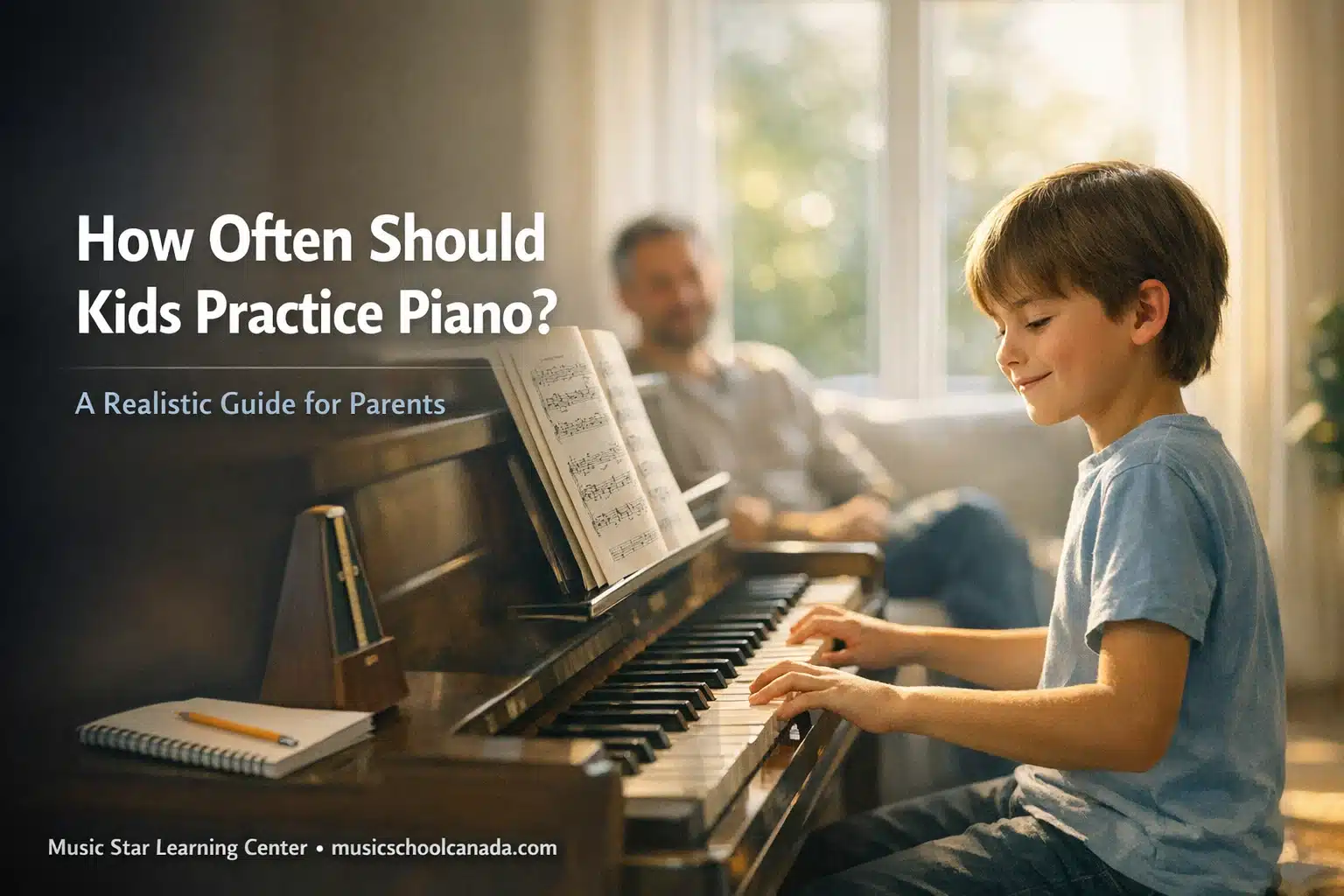
How Often Should Kids Practice Piano?
This is the core question. So let’s answer it clearly.
General Rule by Age
A practical guideline used by many teachers:
- Ages 4–6 → 10–15 minutes daily
- Ages 7–9 → 15–25 minutes daily
- Ages 10–12 → 25–40 minutes daily
- Teens → 45–60+ minutes daily
The keyword here is daily. Short, consistent piano practice sessions beat long, inconsistent ones every time.
Why Daily Practice Works Better
Practicing once a week for 2 hours? Not ideal.
Practicing 15 minutes a day? Much better.
Why?
Because the brain retains information better with repetition spaced over time. This is especially important for kids practicing piano, where coordination and memory are constantly developing.
Quality vs Quantity in Kids’ Practice Piano
Let’s be honest, not all practice is equal.
What “Good Practice” Looks Like
Effective kids’ practice piano sessions include:
- Focused attention (no distractions)
- Repeating tricky sections slowly
- Listening carefully to mistakes
- Practicing hands separately when needed
What to Avoid
- Mindless repetition
- Rushing through songs
- Practicing only once before lessons
- Playing only “fun parts” and skipping the hard ones
A Great Piano Teacher will always emphasize how to practice, not just how long.
Creating a Realistic Practice Routine at Home
This is where most parents struggle. Life gets busy.
Step 1 – Pick a Consistent Time
After school? Before dinner? Right after homework?
Choose a time when your child is mentally fresh.
Consistency is everything in kids’ practice piano routines.
Step 2 – Keep It Predictable
Kids thrive on routine.
When practice becomes part of the daily schedule, it feels less like a chore and more like a habit.
Step 3 – Use a Practice Checklist
A simple structure can make a huge difference:
- Warm-up (scales or finger exercises)
- Review the last lesson
- Practice the new piece
- Play something fun
This keeps kids’ piano sessions balanced and engaging.
How to Motivate Kids to Practice Piano
Let’s be real, motivation doesn’t magically appear.
Make It Fun (Yes, Really)
Use:
- Reward charts
- Sticker systems
- Small goals
Even something simple like, “Practice 5 days this week = choose a movie night,” works.
Celebrate Small Wins
Finished a song? Learned a tricky part?
Celebrate it.
Confidence is built through recognition.
Avoid Turning Practice into Pressure
This is important.
If kids practice piano, their progress slows.
Instead of saying:
“You have to practice.”
Try:
“Let’s play your song together.”
The Role of a Piano Teacher
A strong teacher changes everything.
Why Guidance Matters
A Great Piano Teacher doesn’t just teach songs. They:
- Adjust difficulty levels
- Keep kids engaged
- Teach proper technique
- Guide effective kids practice piano habits
Choosing the Right Instructor
Look for:
- Experience with children
- Patience and communication skills
- Structured lesson plans
If you’re searching for piano lessons near me, don’t just pick the closest option. Choose the right fit.
Common Mistakes Parents Make
Even with the best intentions, it’s easy to get things wrong.
Expecting Too Much Too Soon
Progress in kids practice piano takes time.
Weeks, not days.
Comparing Your Child to Others
Every child learns differently.
Comparison kills motivation.
Skipping Practice Between Lessons
This is a big one.
Weekly lessons without practice = slow progress.
Signs Your Child Is Practicing the Right Amount
How do you know it’s working?
Positive Indicators
- They remember songs from last week
- They show improvement in rhythm and accuracy
- They feel proud of their progress
Red Flags
- Constant frustration
- Forgetting everything between lessons
- Lack of interest
These may mean the kids’ piano routine needs to be adjusted.
How Music Builds More Than Just Skill
This is something many parents don’t realize at first.
Emotional Benefits
Kids who practice piano develop:
- Patience
- Resilience
- Emotional expression
Academic Benefits
Studies consistently show links between music and:
- Better memory
- Improved math skills
- Stronger focus
So when your child is practicing piano, they’re building life skills, not just musical ability.
Why Location Matters for Music Education
If you’re in Burnaby, you actually have an advantage.
Local Access to Quality Education
Finding piano lessons in Burnaby means:
- Shorter travel times
- Consistent attendance
- Community-based learning
Learning in a Supportive Environment
At a trusted Music School in Burnaby, kids are surrounded by:
- Other learners
- Structured programs
- Encouraging teachers
This environment makes kids practice piano more enjoyable.
How to Support Your Child Without Being Pushy
This balance is tricky.
Be Involved, Not Controlling
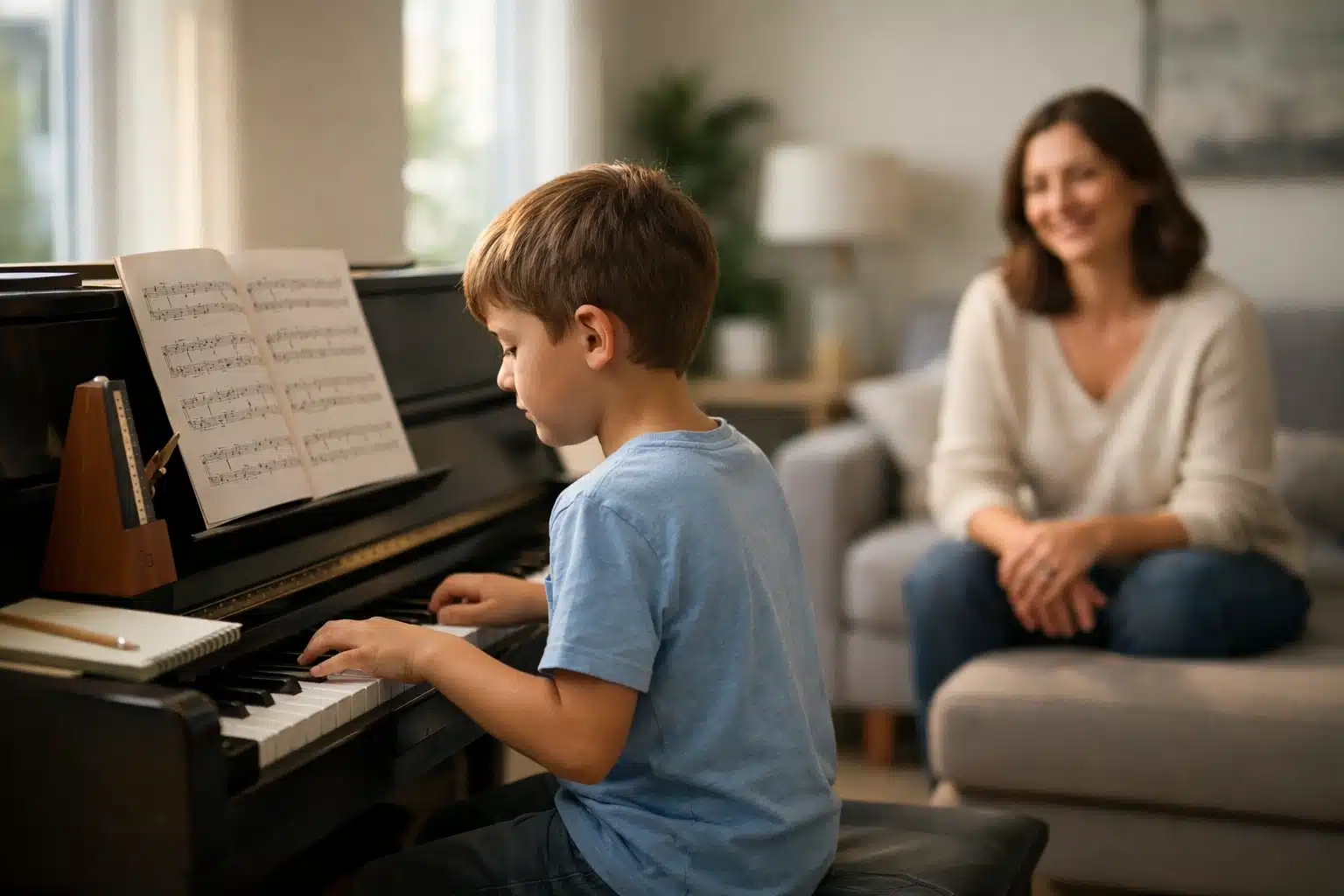
Sit nearby sometimes. Listen. Ask questions.
But don’t micromanage every note.
Lead by Example
Kids mirror behaviour.
Show interest in music, and they’ll follow.
Real-Life Example
Let me share something real.
One parent enrolled their 7-year-old in Piano Lessons for Kids. At first, practice was inconsistent. Maybe once or twice a week.
Progress? Slow.
Then they switched to a simple routine:
- 15 minutes after school
- Same time every day
Within a month, everything changed.
The child became more confident. Lessons became easier. And surprisingly, practice time became something they looked forward to.
That’s the power of consistent kids practice piano.
Building Long-Term Habits
Short-term motivation is great. But habits are better.
Focus on Consistency Over Perfection
Missed a day? No problem.
Just get back on track.
Make Piano Part of Daily Life
Not something separate. Not something optional.
Just… part of the day.
That’s when kids’ piano practice becomes sustainable.
Final Thoughts
So, how often should kids practice piano?
Honestly, it’s less about the exact number of minutes and more about consistency, quality, and enjoyment.
Start small. Stay consistent. Keep it positive.
And remember, every minute of kids practice piano is an investment in your child’s growth, confidence, and creativity.
Ready to Get Started?
If you’re serious about helping your child build a strong foundation, the right guidance makes all the difference.
Explore piano lessons in Burnaby with experienced instructors who truly understand how to Teach Kids Piano in a way that’s engaging, structured, and fun.
Looking for a trusted Music School in Burnaby? Visit Music Star Learning Center and discover programs designed specifically for young learners.
Find us on Google Maps and see why families choose us, Your child’s musical journey can start today. And honestly, there’s no better time than now.