
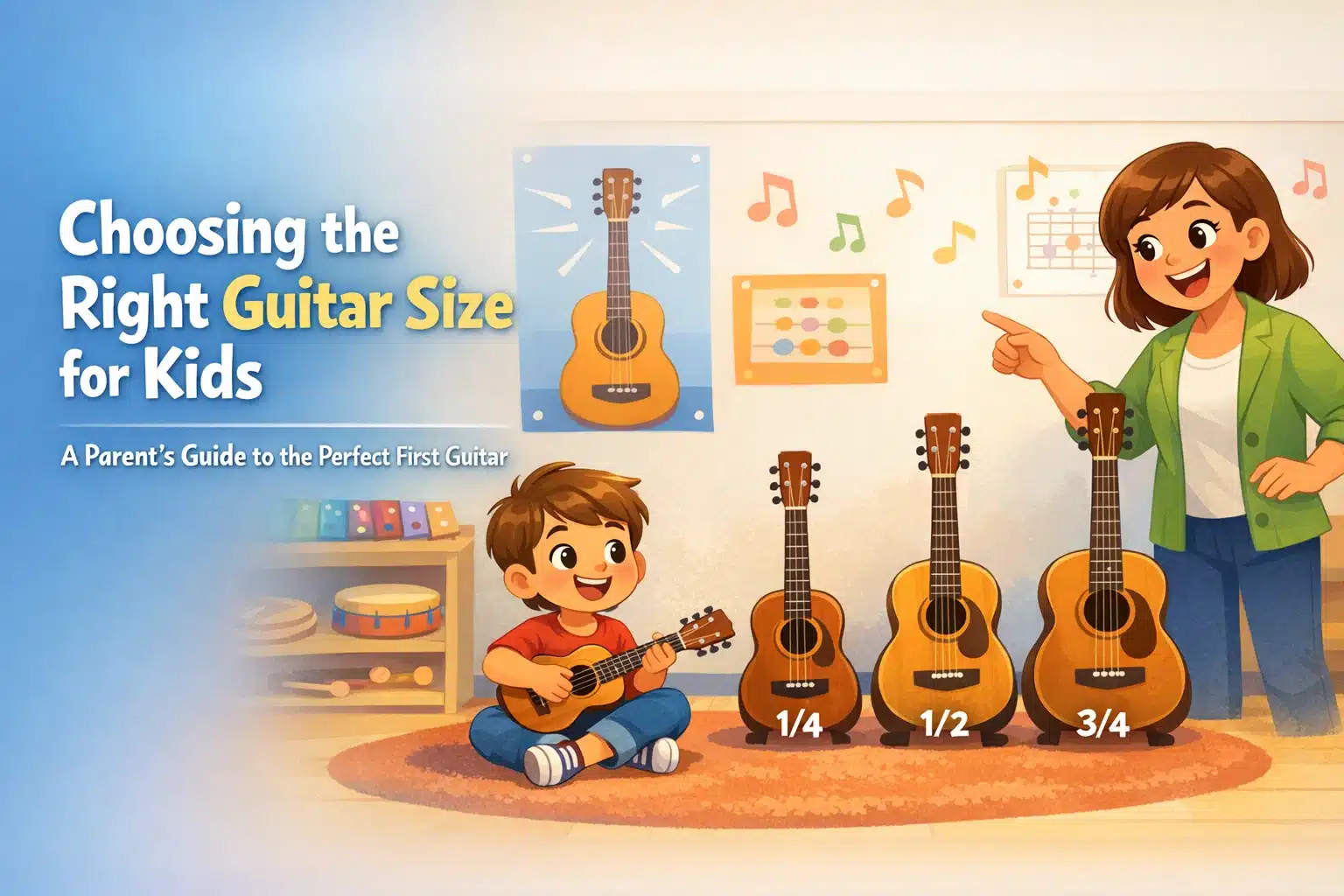
When parents begin searching for the right guitar for their child, one question often comes up first: What is the correct Guitar Size for Kids? Choosing the proper Guitar Size for children is extremely important. A guitar that is too large can frustrate beginners, make playing uncomfortable, and even discourage a child from continuing their musical journey.
Why Guitar Size Matters for Kids
Many parents assume a guitar is simply a smaller version of an adult instrument. In reality, guitar sizing plays a major role in a child’s comfort and progress.
Think about it for a second. Imagine asking a six-year-old to play an adult-sized guitar. The body would feel enormous. The strings would be harder to press. Reaching the frets would feel like stretching across a basketball court.
That’s why selecting the right Guitar Size for Kids matters so much.
Comfort Leads to Confidence
When a child holds a guitar that fits their body properly, a few magical things happen:
- Their posture improves
- Their hands reach the frets easily
- They feel more confident playing
Confidence is a powerful motivator for young learners. A properly sized guitar helps them focus on learning music instead of struggling with the instrument.
Learning Becomes Faster
A correctly sized Guitar Size for Kids allows children to develop proper technique early. Teachers often notice that kids who start with the right guitar progress faster and develop stronger finger control.
In our experience teaching guitar lessons in Burnaby, students who use the correct guitar size often learn their first songs weeks earlier than those struggling with oversized instruments.
Understanding Guitar Size for Kids
Before choosing an instrument, it helps to understand how guitars are sized for children.
Unlike clothing sizes, guitars are typically measured as fractions of a full-sized guitar.
Here are the most common guitar sizes used for kids.
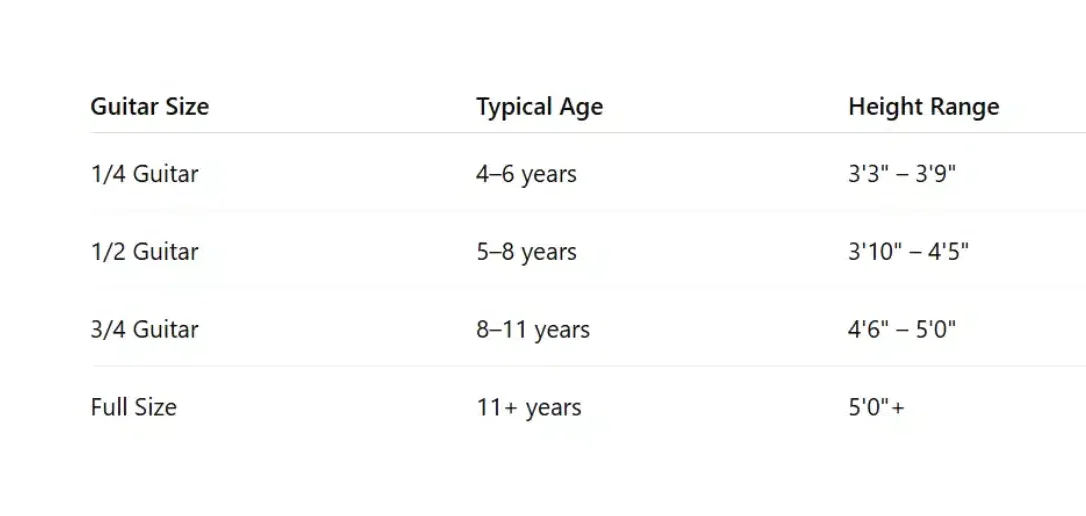
These measurements provide a helpful starting point when selecting the right Guitar Size for Kids.
However, every child grows differently. That’s why teachers at our music school for kids often recommend letting children hold different guitars before making a decision.
The 4 Main Guitar Sizes for Kids
Let’s break down each Guitar Size for Kids so parents can better understand which instrument may suit their child.
1/4 Size Guitar
The 1/4 guitar is the smallest commonly used guitar for children.
Best For:
- Ages 4 to 6
- Very small beginners
- Young children starting music lessons
This size is designed specifically for tiny hands. The body is compact, the neck is shorter, and the strings are easier to press.
Honestly, when a five-year-old picks up a 1/4 guitar, you can almost see their excitement immediately. Suddenly, the instrument feels approachable.
1/2 Size Guitar
The 1/2 guitar is often the next step for slightly older children.
Best For:
- Ages 6 to 8
- Kids transitioning from 1/4 size
- Students starting structured lessons
Many teachers recommend the 1/2 Guitar Size for Kids because it balances comfort with musical development.
Children can still handle the instrument easily while beginning to learn more complex chords.
3/4 Size Guitar
The 3/4 guitar is incredibly popular among young musicians.
Best For:
- Ages 8 to 11
- Pre-teens
- Beginner or intermediate students
This size feels close to a full guitar but remains easier for smaller players.
Many parents searching for the best guitar for beginners eventually choose the 3/4 model. It offers excellent sound while remaining manageable for growing musicians.
Full-Size Guitar
Once children reach their early teens, they usually transition to a full-sized instrument.
Best For:
- Ages 11+
- Taller kids
- Teen musicians
However, even some adults prefer smaller guitars. Comfort always matters more than age recommendations when choosing the right Guitar Size for Kids.
How to Measure the Right Guitar Size for Your Child
Parents often ask teachers a simple question: How do I know if the guitar actually fits my child?
Here’s an easy way to check.
Step 1: Sitting Position
Have your child sit comfortably while holding the guitar on their lap.
The guitar body should rest naturally against their torso.
Step 2: Arm Reach
Ask them to reach the first few frets.
Their arm should extend comfortably without stretching too far.
Step 3: Finger Reach
If their fingers can easily press the strings near the first few frets, the Guitar Size for Kids is likely appropriate.
If they struggle to reach the frets, the guitar may be too large.
Acoustic vs Classical Guitar for Kids
Another common question parents ask is whether kids should start with acoustic guitars or classical guitars.
Let’s break it down.
Classical Guitars
Classical guitars use nylon strings, which are softer and easier on young fingers.
For most beginners, teachers recommend classical guitars as the first Guitar Size for kids.
Advantages
- Softer strings
- Smaller neck
- Easier for beginners
Acoustic Guitars
Acoustic guitars typically use steel strings.
These produce a brighter sound but can feel harder for young fingers.
However, some children strongly prefer acoustic guitars. Motivation matters, so choosing the guitar a child feels excited about can be just as important as technical details.
Common Mistakes Parents Make When Buying a Guitar for Kids
Even well-meaning parents sometimes make simple mistakes when choosing a Guitar Size for Kids.
Let’s be real. Music stores can feel overwhelming.
Here are a few common pitfalls.
Buying a Guitar That Is Too Big
Parents sometimes purchase a larger guitar, thinking their child will “grow into it.”
Unfortunately, this often leads to frustration and slower progress.
Choosing Based Only on Price
Cheap guitars often have poor tuning stability and uncomfortable strings.
Children may think they are doing something wrong when the instrument isn’t well-made.
Ignoring Teacher Recommendations
If your child is enrolled in guitar lessons in Burnaby, instructors often provide guidance on the ideal Guitar Size for Kids.
Listening to that advice can save time, money, and frustration.
When Should Kids Start Learning Guitar?
Parents often ask: What’s the best age to start guitar lessons?
Honestly, it depends on the child.
Some children begin around age 5 or 6, while others may start later.
What matters more than age is readiness.
Signs Your Child Is Ready
- Interest in music
- Ability to focus for short lessons
- Basic hand coordination
Many families exploring music schools near me discover that structured lessons help kids stay motivated.
At Music Star Learning Center, teachers introduce children to guitar in a fun and engaging way, making learning feel like an adventure rather than a chore.
How Long Does It Take for Kids to Learn Guitar?
Parents are often curious about the timeline for learning.
Truthfully, every child progresses differently.
Some students begin playing simple songs within a few weeks, while others take more time.
If you’re curious about learning timelines, this guide explains how long to learn guitar in more detail.
Consistency is the key. Even 10 minutes of daily practice can lead to noticeable improvement.
Beginner Guitar Techniques Kids Should Learn First
Once a child has the right Guitar Size for Kids, learning basic skills becomes much easier.
First Skills Kids Learn
- Holding the guitar properly
- Basic finger placement
- Simple strumming patterns
- Playing beginner chords
These fundamentals form the foundation of a successful beginner guitar journey.
Students who start with good technique often develop stronger musical abilities over time.
Helping Your Child Stay Motivated While Learning Guitar
Learning music is exciting at first. But like any skill, it requires patience.
Here are a few ways parents can help.
Celebrate Small Wins
Maybe your child plays their first chord. Maybe they finish their first song.
Celebrate it.
These small victories help build lasting motivation.
Create a Musical Environment
Play music at home. Attend local performances. Encourage creativity.
Children surrounded by music often develop a deeper interest in it.
Guitar vs Piano: Which Instrument Is Better for Kids?
Parents sometimes wonder whether their child should learn guitar or piano.
Both instruments offer incredible benefits.
If you’re comparing options, our guide on Piano vs Guitar for Kids explores the advantages of each.
Many children even learn both instruments at different stages of their musical journey.
Why Professional Music Lessons Make a Big Difference
While some children learn through online tutorials, structured lessons offer many advantages.
Teachers help students:
- Build proper technique
- Avoid bad habits
- Progress faster
Families looking for guitar lessons in Burnaby often choose structured programs because they provide guidance, accountability, and encouragement.
Students also benefit from interacting with other young musicians.
How Music Education Benefits Children Beyond Guitar
Learning guitar isn’t just about music.
It builds life skills.
Cognitive Development
Music training improves memory and concentration.
Emotional Expression
Children use music to express emotions creatively.
Discipline and Confidence
Learning an instrument teaches patience and perseverance.
At our Music School in Burnaby, many parents say music lessons helped their children become more confident in school and social settings.
Choosing a Quality Guitar for Your Child
When shopping for a Guitar Size for Kids, consider these factors.
Build Quality
A well-made guitar stays in tune and feels comfortable.
String Type
Nylon strings are usually better for beginners.
Brand Reputation
Well-known beginner guitar brands often provide better learning experiences.
If you’re unsure which instrument to buy, teachers at our music school for kids are always happy to help parents choose the right guitar.
Supporting Your Child’s Musical Journey
Starting music lessons is an exciting milestone.
Children who learn to play the guitar often develop a lifelong appreciation for music.
Sometimes they perform in school concerts. Sometimes they play for family gatherings.
Sometimes they enjoy the quiet satisfaction of mastering a new song.
And honestly, those moments are priceless.
Conclusion
Choosing the right Guitar Size for Kids can make a significant difference in a child’s musical journey. The right guitar helps children feel comfortable, confident, and excited about learning music.
From selecting the proper size to encouraging consistent practice, parents play a huge role in helping young musicians succeed.
At Music Star Learning Center, we see every day how the right guidance and the right instrument can transform a child’s experience with music. With supportive teachers and engaging lessons, kids quickly move from their first notes to playing songs they love.
Start Your Child’s Musical Journey Today
If your child is ready to explore music, the best step is learning with experienced instructors.
Join Music Star Learning Center, a trusted Music School in Burnaby, where children discover the joy of music in a fun and supportive environment.
Explore our programs, meet our instructors, and learn more about guitar lessons in Burnaby today.
You can also visit us directly on Google Maps to see our location and read reviews from local families who trust our programs.
Start your child’s musical journey today with Music Star Learning Center.