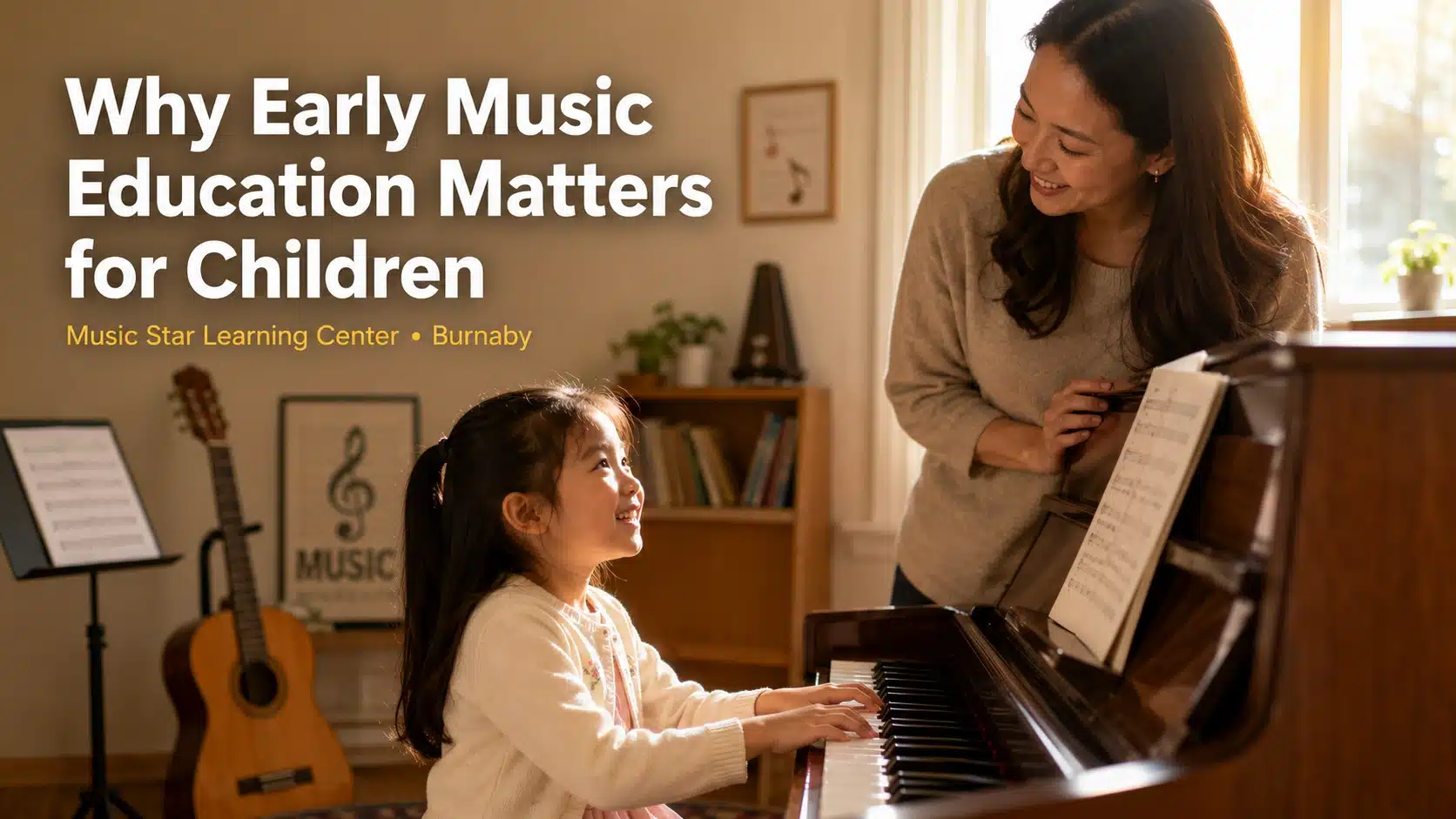
Picture this: a three-year-old banging on a toy xylophone with the kind of focus most adults reserve for tax season. It looks like play, and honestly, it is. But underneath that joyful noise, something remarkable is happening inside that child’s brain. This is the quiet magic of early music education, and it’s why parents in Burnaby and beyond are rethinking what “extracurricular activities” really mean.
Let’s be real: in a world stuffed with apps, screens, and a thousand competing priorities, carving out time for music lessons can feel like just one more thing on the to-do list. But early music education isn’t a luxury add-on. It’s foundational. It shapes how children think, feel, connect with others, and even how they perform in school years down the road. This article digs into why that is, what the research actually says, and how you can find the right path forward for your child, whether that’s piano, guitar, or simply learning to love the sound of their own voice.
What Is Early Music Education, Really?
Before going further, it helps to define terms. Early music education typically refers to structured (or semi-structured) musical learning that begins in the toddler and preschool years, roughly ages two through six, though the benefits extend well into the elementary years. It’s not about producing the next prodigy. It’s about exposure, rhythm, listening, and perhaps most importantly, joy.
Programs at this stage usually look playful on the surface: singing circles, simple percussion instruments, movement games set to music, and call-and-response activities. Underneath, though, instructors are building the scaffolding for pitch recognition, beat-keeping, and auditory processing. Kids don’t know they’re “learning.” They think they’re having fun. And really, isn’t that the best kind of education?
Why the Early Years Matter So Much
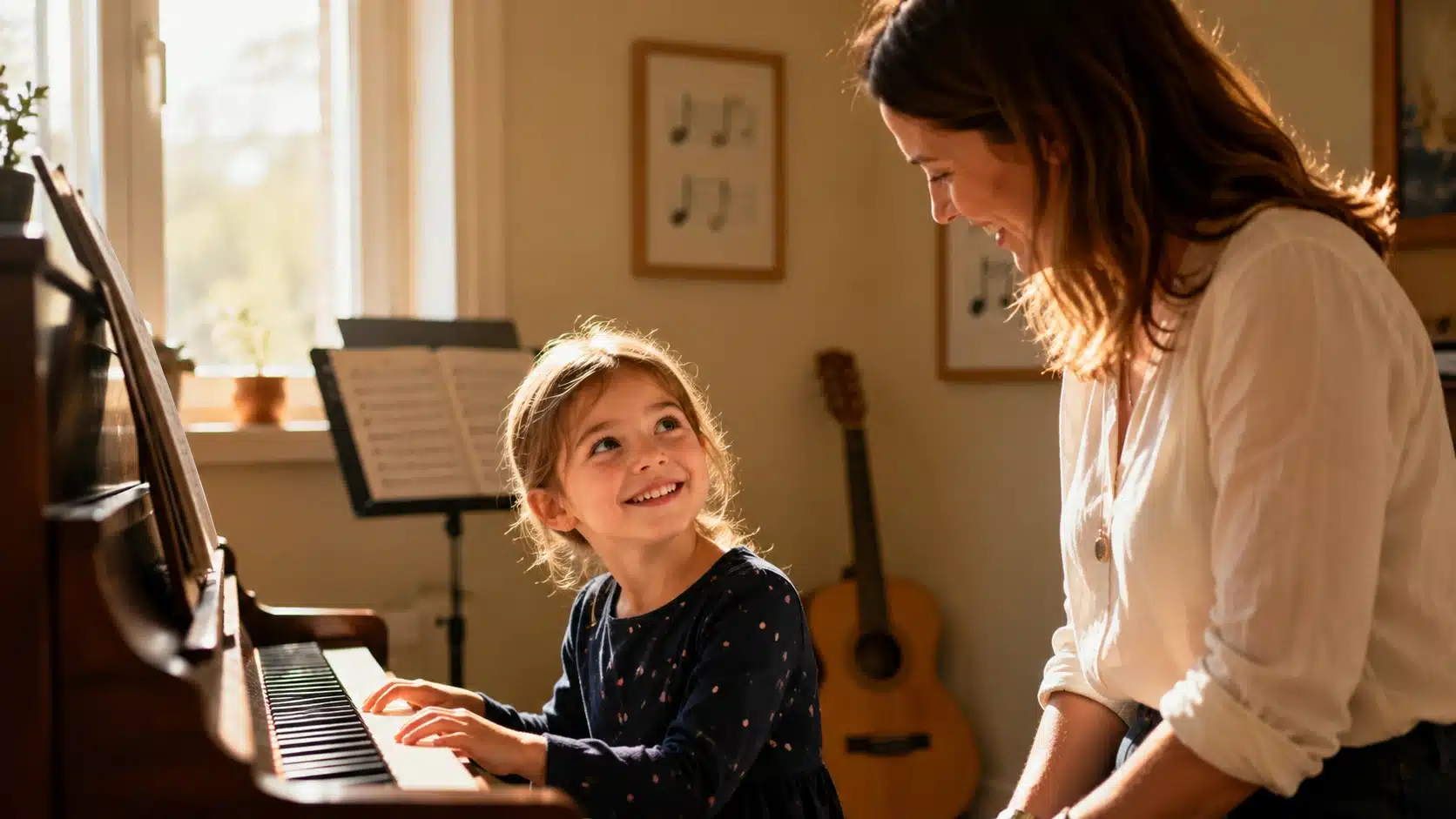
There’s a reason pediatric specialists and educators keep circling back to those first few years of life. A child’s brain is remarkably plastic during this window, more so than at any other point in life. Neural pathways are forming at a staggering rate, and musical activity happens to engage an unusually wide swath of the brain all at once: auditory processing, motor coordination, emotional regulation, and language centres all light up together when a child sings, claps, or plucks a string.
This is part of why early music education tends to produce ripple effects far beyond the music room itself.
The Science Behind Early Music Education
Let’s get into the research for a moment, because this isn’t just anecdotal fluff; there’s real science backing this up.
Brain Development and Neural Connections
Studies using brain imaging have shown that children engaged in consistent musical training tend to develop stronger connectivity between the left and right hemispheres of the brain, largely through the corpus callosum. This matters because it means information travels more efficiently across the brain, supporting everything from problem-solving to emotional processing. Musical training essentially gives the brain a full-body workout, rather than isolating a single skill.
Language Skills and Music
Here’s something that surprises a lot of parents: musical training and language development are deeply intertwined. Both rely on similar auditory processing skills for distinguishing pitch, rhythm, and subtle sound differences. Children exposed to early music education often show improved phonological awareness, which is a fancy way of saying they’re better at hearing and manipulating the sounds that make up words. That skill happens to be one of the strongest predictors of reading success later on.
Think about it this way: a child learning to clap out the syllables in “el-e-phant” during a music class is quietly practicing the exact skill they’ll need to sound out new words in a picture book a year later.
Emotional and Social Benefits
It’s not all brain scans and cognitive science, though. Music does something else, too; it helps kids feel things and feel okay about feeling them.
Building Confidence Through Performance
There’s a particular kind of pride on a five-year-old’s face after they’ve played a simple tune for their grandparents, even if a note or two wobbles along the way. That small moment of “I did that” builds self-esteem in a way that’s hard to replicate elsewhere. Over time, low-stakes recitals and informal performances teach children that mistakes aren’t catastrophic; they’re just part of the process. That’s a life skill, not just a music skill.
Teamwork and Group Classes
Group music classes, whether it’s a toddler singalong or a children’s ensemble, also teach turn-taking, listening to others, and working toward a shared goal. A group of six-year-olds trying to keep a steady beat together is basically a crash course in cooperation, dressed up as a fun activity. Nobody’s calling it “social-emotional learning” in the moment, but that’s exactly what it is.
Academic Advantages Linked to Early Music Education
Parents often ask whether music lessons actually help with school performance, and the honest answer is: yes, in several documented ways.
Math Skills and Rhythm
Rhythm, at its core, is math. Counting beats, subdividing measures, recognizing patterns- these are the same cognitive muscles used in early arithmetic. Kids who spend time clapping out quarter notes and half notes are, in a roundabout way, practicing fractions before they even know what a fraction is.
Memory and Focus
Memorizing a short song or a simple sequence of notes trains working memory, the mental workspace we use to hold and manipulate information. This skill transfers directly to classroom tasks like following multi-step instructions or remembering a sequence of events in a story. Plus, sitting through a 30-minute music lesson, however playful, builds attention span in a way that’s genuinely useful once formal schooling begins.
Choosing the Right Music School in Burnaby
So, how do you actually get started? This is where a lot of parents feel a bit lost, and that’s completely understandable. Not all programs are created equal, and finding the right fit matters more than people expect.
What to Look for in Music Schools Near You
When searching for music schools near me, consider a few practical factors:
- Age-appropriate curriculum programs designed specifically for young children, not just scaled-down adult lessons.
- An instructor’s experience with young learners, teaching a four-year-old, requires a completely different skill set than teaching a teenager.
- Class size and structure, smaller groups or one-on-one settings, often work better for maintaining a young child’s attention.
- A warm, encouraging environment kids need to feel safe making mistakes, not judged for them.
A well-regarded Music School in Burnaby will typically offer a trial lesson or an introductory session, which is a great way to gauge whether the teaching style clicks with your child before committing to a full term.
Instructor Qualifications
Look for instructors with formal training and, ideally, specific experience in early childhood music education (not just general music teaching). The best instructors know how to read a room full of squirmy five-year-olds and adjust on the fly; that’s a skill honed through experience, not just credentials on paper.
Class Sizes and Age-Appropriate Curriculum
Smaller class sizes, generally under eight children for group sessions, tend to produce better engagement and fewer meltdowns (let’s be honest, meltdowns happen). A good Music School will also rotate activities frequently to match a young child’s naturally short attention span, rather than expecting a five-year-old to sit still through a 45-minute lecture on music theory.
Popular Instruments for Young Beginners
Once a child has had some exposure to general musicianship, many families start wondering about instrument-specific lessons. Two options consistently top the list for young beginners.
Piano Lessons: A Great Starting Point
Piano is often recommended as a first instrument, and for good reason. The layout is visual and logical: notes go up, notes go down, and the relationship between keys is easy for a young child to grasp. Searching for piano lessons near me is usually the first step parents take, and honestly, it’s a solid one. Piano also builds a strong foundation in reading music, which transfers well if a child later wants to pick up a second instrument.
Guitar Lessons: Fun and Accessible
Guitar, meanwhile, appeals to kids who want something a little more hands-on and portable. There’s something inherently cool about strumming a guitar, even as a beginner, and that “cool factor” can be a genuine motivator for a reluctant learner. Parents searching for guitar lessons near me often find that smaller, kid-sized guitars make the learning curve much more manageable for little hands.
Neither instrument is objectively “better”; it really comes down to the child’s personality and interests. A quieter, methodical kid might gravitate toward the piano. A more energetic child might light up at the idea of a guitar. Either way, the goal at this stage isn’t mastery. It’s a connection.
Real Stories: How Early Music Education Changes Lives
Sometimes the research, however compelling, doesn’t hit home the way a real story does. Consider a child who struggled with speech clarity at age four. After a year of weekly singing and rhythm-based classes, her parents noticed she was not only more confident speaking in front of others but also seemed to enunciate more clearly, likely a byproduct of all that practice distinguishing and reproducing sounds through song.
Or think of the shy seven-year-old who wouldn’t raise his hand in class but, after two years of group guitar lessons, ended up volunteering to perform at a small community showcase. Nobody predicted that. Music has a funny way of drawing kids out of their shells, one note at a time.
These aren’t isolated miracles; they’re fairly typical outcomes when early music education is approached with patience and the right guidance.
Tips for Parents Supporting Young Musicians at Home
Lessons matter, sure, but what happens between lessons matters just as much. Here are a few practical ways parents can reinforce learning at home:
- Keep practice short and playful. Ten focused minutes beat thirty minutes of frustration for a young child.
- Celebrate effort, not perfection. A wrong note played with enthusiasm is still progress.
- Make music part of daily life. Sing in the car, dance in the kitchen, clap along to the radio.
- Attend performances together. Live music, even a local community concert, builds appreciation and excitement.
- Stay consistent. Regular, low-pressure exposure beats sporadic, high-intensity sessions every time.
None of this requires a musical background from the parent, by the way. You don’t need to read sheet music to hum along with your kid in the backseat. That counts. It really does.
Conclusion
At the end of the day, early music education offers something rare: a single activity that touches cognitive development, emotional growth, social skills, and academic readiness all at once. It’s not about raising a concert pianist or a guitar prodigy, though if that happens, wonderful. It’s about giving children a rich, joyful outlet that shapes how their brains develop during the most formative years of life. Whether your child ends up loving piano, guitar, or simply singing off-key in the shower for years to come, the early exposure to music sets a foundation that lasts a lifetime. And honestly, watching a small child light up over a simple melody they just learned to play? That alone makes it worth it.
Ready to Start Your Child’s Musical Journey?
If you’re in Burnaby and searching for a nurturing, experienced Music School to start your child’s musical journey, now is the perfect time to reach out. Visit Music Star Learning Center at musicschoolcanada.com to learn more about our programs, book a trial lesson, or ask any questions you might have. Our team is happy to help you find the right fit for your child.
Prefer to see us in person first? Find Music Star Learning Center on Google Maps and drop by for a visit, or check out reviews from other Burnaby families who’ve been exactly where you are right now. Your child’s musical adventure could start this week. Why wait?

