Beginner Piano Lessons in Burnaby: A First-Timer’s Guide for Kids and Adults
If you are looking for beginner piano lessons in Burnaby for yourself, or for a child in your family, the practical questions matter most: what a first piano lesson involves, how much practice a new player needs, and what lessons cost before you commit. This guide answers those questions plainly, with a focus on adults who are starting from scratch and on anyone sitting down at a keyboard for the first time.
Music Star Learning Center has been teaching music in Burnaby since 2007, from our studio at Unit 200, 4789 Kingsway, across from Metropolis. Our piano lessons are one-to-one, for children and adults, in person or online, and you do not need to buy a piano first. A keyboard or digital piano is plenty for a beginner. This guide covers the first lesson, the right age, practice, pricing, and choosing a teacher.
In this guide:
- What Lessons Cover
- First Lesson
- Right Age
- Adult Beginners
- Practice
- Pricing
- Choosing Lessons
- Getting Here
What Beginner Piano Lessons in Burnaby Actually Cover
Piano suits beginners because the instrument shows how music is organised. Low notes sit on the left, high notes on the right, and each key has a fixed place, so a new player can see the pattern instead of guessing it. A good first course uses that clear layout to build reading, rhythm and touch together, rather than treating songs as the only goal.
Early lessons start with how the body meets the keys: sitting at the right height, keeping the wrist level, and letting each finger press cleanly. From there, students learn the treble and bass clefs, note values and counting aloud, then add five-finger patterns, simple scales and short pieces they can repeat at home. Each new piece should feel like a small step, not a leap.
Why We Teach Beginners One on One
New piano players benefit from close, individual attention because small technical details are easy to miss. A thumb that collapses, a wrist that dips, or a finger that lands on the wrong key can quietly become a habit if nobody notices. In a private lesson, the teacher can spot those details and correct them straight away, while the movement is still easy to change.
One-to-one lessons also let the repertoire follow the student. A child who loves film music can work on a simple arrangement of a favourite theme, while an adult can aim for a song they have wanted to play for years. When the music matters to the player, practice is easier to keep going, and progress feels personal rather than generic.
What a Typical Weekly Lesson Looks Like
A weekly lesson works best when it follows a predictable shape. For a newer student, 30 minutes is often enough to cover the essentials without losing focus, and longer lessons simply give each part more breathing room. The table below shows how that time is typically divided in the first months.
| Part of the lesson | Roughly how long | What it builds |
|---|---|---|
| Settling in, posture check and five-finger patterns | 5 minutes | Relaxed hands and an even touch |
| Scales, rhythm work or a short game | 5 to 7 minutes | Coordination and a steady pulse |
| Looking back at last week’s piece | 8 to 10 minutes | Confidence from hearing clear progress |
| New notes, a new pattern or a tricky passage | 8 to 10 minutes | Reading and technique, step by step |
| Agreeing what to practise before next time | 2 to 3 minutes | A short, achievable home plan |
The final part of the lesson is easy to rush, yet it shapes the whole week. When a student leaves knowing exactly which bars to repeat and for how long, the next lesson starts from progress instead of from scratch. If practice time worries you most, the practice section below gives realistic daily targets by age.
Your First Piano Lesson
The first piano lesson families book with us is usually a 30-minute trial, and it is deliberately low-pressure. Nobody is expected to play anything, read anything, or know anything in advance. The teacher’s job in that first meeting is to find out who the student is: their age, the music they like, whether they have touched a keyboard, and what they hope to get out of it. That is the whole point of a trial, to see whether teacher and student click before anyone commits to a weekly schedule.
Before the First Lesson
There is nothing to prepare. A keyboard or digital piano at home helps, but it is not required before the first lesson, and our teachers would rather a family wait and get the right instrument than rush into the wrong one. If your child is the student, bring them, not just their schedule. A trial works best when the teacher can meet the actual student and watch how they sit at the keys. Comfortable clothes and ten unhurried minutes to arrive are all you need.
What the First Lesson Looks Like
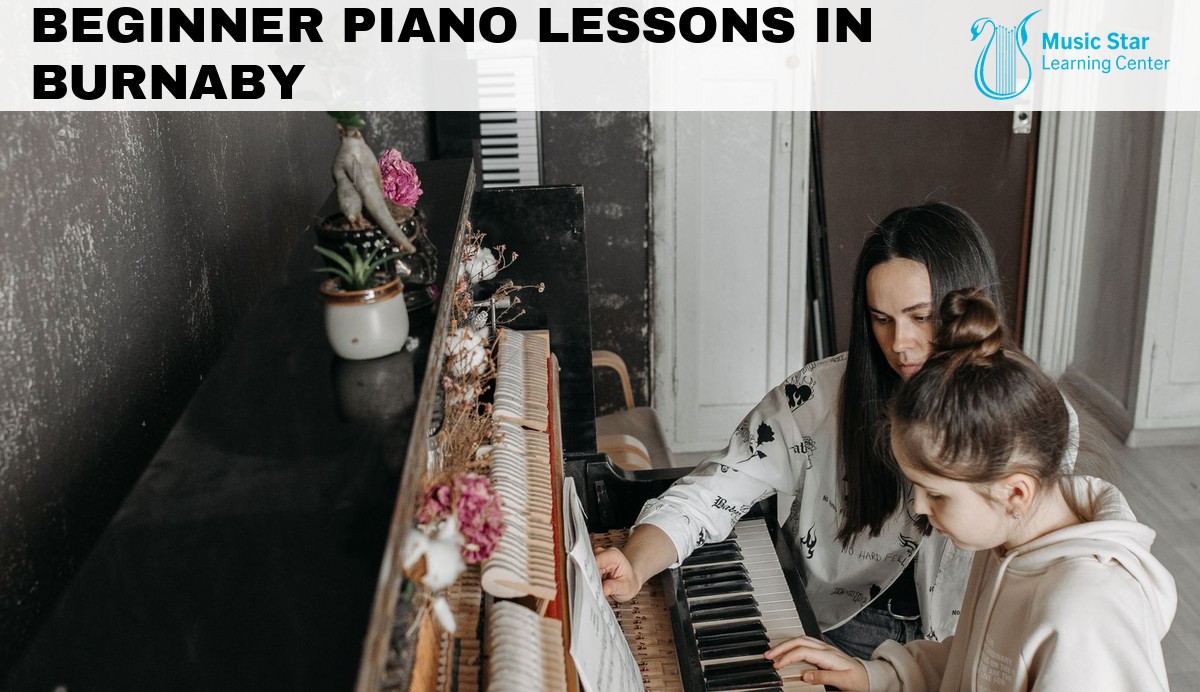
A first piano lesson usually starts away from the music stand. The teacher shows the student how to sit: bench height, feet flat, back straight but relaxed, arms loose. Then comes the keyboard itself, the pattern of white and black keys, the groups of two and three black keys that act as landmarks, and middle C. Most students play their first notes in that same lesson, a simple five-finger pattern, and leave having made a real sound on a real piano.
Bring yourself, or your child, with no preparation needed, a notebook if you like taking notes, and any sheet music or books you already own, so the teacher can see where you are. Bring your questions about scheduling, pricing, or RCM exams too, and ten unhurried minutes to arrive and settle in.
By the end of the lesson, the teacher will suggest a lesson length and a weekly time, and will be honest if the timing is not right. If a young child would do better starting in a few months, the teacher will say so. A first piano lesson should end with a clear next step, not a sales pitch. Families often say the trial is what decided them, not the brochure.
Meet the Teacher Behind Our Beginner Piano Lessons in Burnaby
When parents compare teachers, the real question is whether the person at the piano has both serious training and the patience to explain the basics clearly. Qualifications and experience tell part of that story, and a trial lesson you can watch tells the rest.
Snow: Piano Diploma From Capilano University
Snow holds a Piano Diploma from Capilano University and studied piano at the University of British Columbia. She has more than four years of teaching experience and specialises in the RCM curriculum, combining practical skills with theory. Her lessons suit first-timers well, because the RCM path gives a new student a clear ladder of small, graded steps.
Lessons follow a clear sequence from week to week: posture, five-finger patterns, simple reading, first scales and first pieces. Snow can point to exactly where a student is on that path and what comes next, so both the student and their family can see progress.
Questions to Ask Before You Book
Whichever teacher you consider, a short conversation or a trial lesson will tell you a lot. Our guide on how to choose the right piano teacher goes into more detail, and here is what we would ask:
A confident teacher will answer all six directly. If a studio avoids the question about qualifications, that tells you something too.
The Right Age to Start Beginner Piano Lessons in Burnaby
We welcome piano students from age four, and we teach adults who have never touched an instrument. Piano works well from an early age because the keys are laid out in front of the student, with nothing to hold up, tune, or squeeze, but readiness matters more than the number on a birthday cake.
For Parents of Young Children
For young children, our piano lessons for kids page explains how lessons are shaped for little hands and short attention spans. If timing is the question, our guide to the best age to start piano lessons for kids covers readiness in more detail. For home routines, our article on how often kids should practice piano offers realistic targets. And if you are comparing teachers, our guide to choosing the right piano teacher walks through what to look for.
Adult Beginner Piano Lessons: A First Lesson That Fits Real Life
Adult beginner piano lessons attract people for many reasons: a song they have loved for years, a child who has started lessons, a wish to understand the music they listen to, or simply the pleasure of making a sound with their own hands. Adults often worry they have left it too late, but starting as a grown-up has real advantages. You can follow explanations quickly, connect theory to things you already know, and choose repertoire that genuinely interests you.
A first lesson for an adult looks much like the trial described above, with one difference: the conversation matters even more. The teacher will ask what you hope to play, how you like to learn, and how much time you can realistically give each week. You will sit at the keyboard, learn where middle C is, and play a short five-finger pattern in the lesson itself. Nobody expects you to read music on day one, and there is no test to pass before you begin.
A realistic pace for adults is steady rather than fast. With a weekly lesson and short practice sessions on most days, many adults can play a simple tune within the first few weeks and build from there, piece by piece. Some adults enjoy the structure of RCM levels, while others prefer to learn songs they love without exams. Either path works, and the teacher can adjust the plan as your goals become clearer. Teens who already play another instrument often move quickly too, since reading and rhythm carry over.
Fitting practice around work is the main challenge for adult students, so the home plan should be small enough to survive a busy week. Twenty minutes on four or five days beats one long session at the weekend, and it can be split into two shorter sittings if that suits your day. Keep the keyboard visible, end each session with a piece you enjoy, and let the teacher know when work gets hectic so the weekly target can flex. Consistency, not intensity, is what carries an adult beginner through the first months.
How Practice Works in Beginner Piano Lessons in Burnaby
Lessons are only part of learning piano. What happens at home between lessons shapes how quickly a beginner improves, and it is the part families worry about most. The good news is that home practice does not need to be long. It needs to be regular. Ten focused minutes, five days a week, will beat an hour crammed in on Sunday every time.
How Much Practice Is Enough?
The right amount depends on age and lesson length, and it grows as the student grows. The table below is a realistic starting point. If you want a deeper guide, our article on how often should kids practice piano covers routines, motivation, and what to do on a week when nothing goes to plan.
| Student | A good daily target | How to keep it going |
|---|---|---|
| Ages 4 to 6 | 10 minutes, 4 to 5 days a week | Keep it playful and sit nearby |
| Ages 7 to 9 | 15 minutes, 5 days a week | Same time each day, short and steady |
| Ages 10 to 12 | 20 minutes, 5 days a week | Let them choose the closing piece |
| Teens and adults | 20 to 30 minutes, 4 to 5 days a week | Fit it around work and school, not against them |
Notice what the table does not say: it does not say an hour a day. Beginners who practise a little, often, build the habit that carries them through the harder months.
Making Practice Stick
Three small habits make more difference than any practice chart. First, fix a time, straight after school or right after dinner, so practice becomes part of the day. Second, keep the piano or keyboard visible and uncovered, ready to use. Third, end every session with a piece the student likes. Students who finish on a win come back the next day willingly.
What Beginner Piano Lessons in Burnaby Cost
Lesson prices vary widely between studios, and many schools only share them after a phone call. We would rather show the fixed tuition rates plainly, so you can plan. The same rates apply to children and adults, and the same three lesson lengths cover every beginner.
Choosing the Right Lesson Length
| Lesson type | Length | Price |
|---|---|---|
| Private Piano Lesson | 30 minutes | $35 |
| Private Piano Lesson | 45 minutes | $47 |
| Private Piano Lesson | 60 minutes | $62 |
| RCM Piano Exam Prep, Level 3–5 | 4 x 45-minute sessions | $200 |
| RCM Piano Exam Prep, Level 6–8 | 4 x 60-minute sessions | $260 |
| RCM Piano Exam Prep, Level 9–10 | 4 x 60-minute sessions | $300 |
These are the fixed tuition prices for private lessons. Lesson books and materials are not included in tuition. You can also see the full details on our pricing page.
Most beginners start at 30 minutes, which matches a young attention span. Adults and older children often settle into 45 minutes once practice becomes a habit, and 60 minutes suits students working toward an RCM exam. Private lessons are priced the same for every instrument we teach, so the choice is about time, not cost.
RCM Exam Preparation
For students who like clear goals, the Royal Conservatory of Music Certificate Program offers a structured path from the earliest levels to advanced diplomas. Each level sets requirements for repertoire, scales and arpeggios, etudes, ear training, and sight reading, and exams are marked out of 100, with 60 as the pass mark. The RCM publishes the official Royal Conservatory of Music piano syllabus and exam requirements online.
Our exam packages are built around those requirements in blocks of four sessions. Exam preparation is available for piano from Level 3 to Level 10, with packages from $200 per four-session block.
Is an RCM Exam Right for a Beginner?
Exams are optional, and no beginner needs one in year one. They suit students motivated by milestones, and teens who may want music credentials later. Playing purely for enjoyment is fine too, and many of our longest-staying students have never taken an exam.
How to Choose Beginner Piano Lessons in Burnaby
A search from a Burnaby address turns up independent teachers, larger academies, music stores with lesson rooms, and online marketplaces. Each can work. The trick is to compare options on what actually predicts whether a student sticks with it, and to visit a trial lesson before deciding.
| What to compare | What to look for | Why it matters |
|---|---|---|
| Teacher training | Qualifications you can check, plus real experience with beginners | Early technique follows whoever corrects it first |
| Lesson format | Private lessons at the start, group playing only later | Piano technique needs individual correction early on |
| Pricing | Rates published before you call | Easier to budget for a full year of lessons |
| Trial lesson | A short first lesson before you commit | Lets the student meet the teacher without pressure |
Qualifications alone miss half the picture, because teaching style matters just as much. The only way to judge it is to watch a lesson. Ask each studio whether the trial is one on one, since some are run in groups.
Why Travel Time Matters More Than You Think
Distance is one of the most common reasons families stop lessons. A trip that feels easy in September can feel much harder on a dark winter evening. When you shortlist studios, check the route at the time of day you would actually travel. Families tend to stay with lessons that fit easily into the week.
Getting to Our Studio From Burnaby and Beyond
Our studio is at Unit 200, 4789 Kingsway in Burnaby, in the Centrepoint building directly across from Metropolis at Metrotown. Families looking for piano lessons in Burnaby can reach us easily, and from Vancouver, Coquitlam, or New Westminster, the SkyTrain makes it a straightforward trip.
By SkyTrain, Bus or Car
Metrotown Station on the Expo Line is a five-minute walk from the building, with the Metrotown bus loop right beside it. Families from Downtown Vancouver, East Vancouver, and much of Burnaby can ride in without changing trains. Kingsway is the main road between Metrotown and Downtown Vancouver, so driving in is straightforward.
What Burnaby Families Say
It helps to hear from other families rather than only from us. You can read reviews from Burnaby families on our Google Business Profile, where parents describe their teachers and what the first months were really like. Reading a handful before choosing a studio is the quickest way to get a feel for any school, including ours.
Conclusion
Choosing where to learn piano comes down to four honest questions. Is the teacher genuinely qualified? Does the format suit a beginner? Are the prices clear? Can your family get there every week without a struggle? If a studio answers all four plainly, you are in good hands.
Here, the answers are private lessons with a teacher who holds a Piano Diploma from Capilano University, published pricing from $35, a trial lesson before any term commitment, and a studio a short SkyTrain ride from much of the city. That is the kind of teaching families stay with for years. Adult beginner piano lessons start with a single trial, so book a 30-minute first lesson and meet the teacher. If you are still weighing your options, take a look at our piano lessons in Burnaby and see how they fit your week.