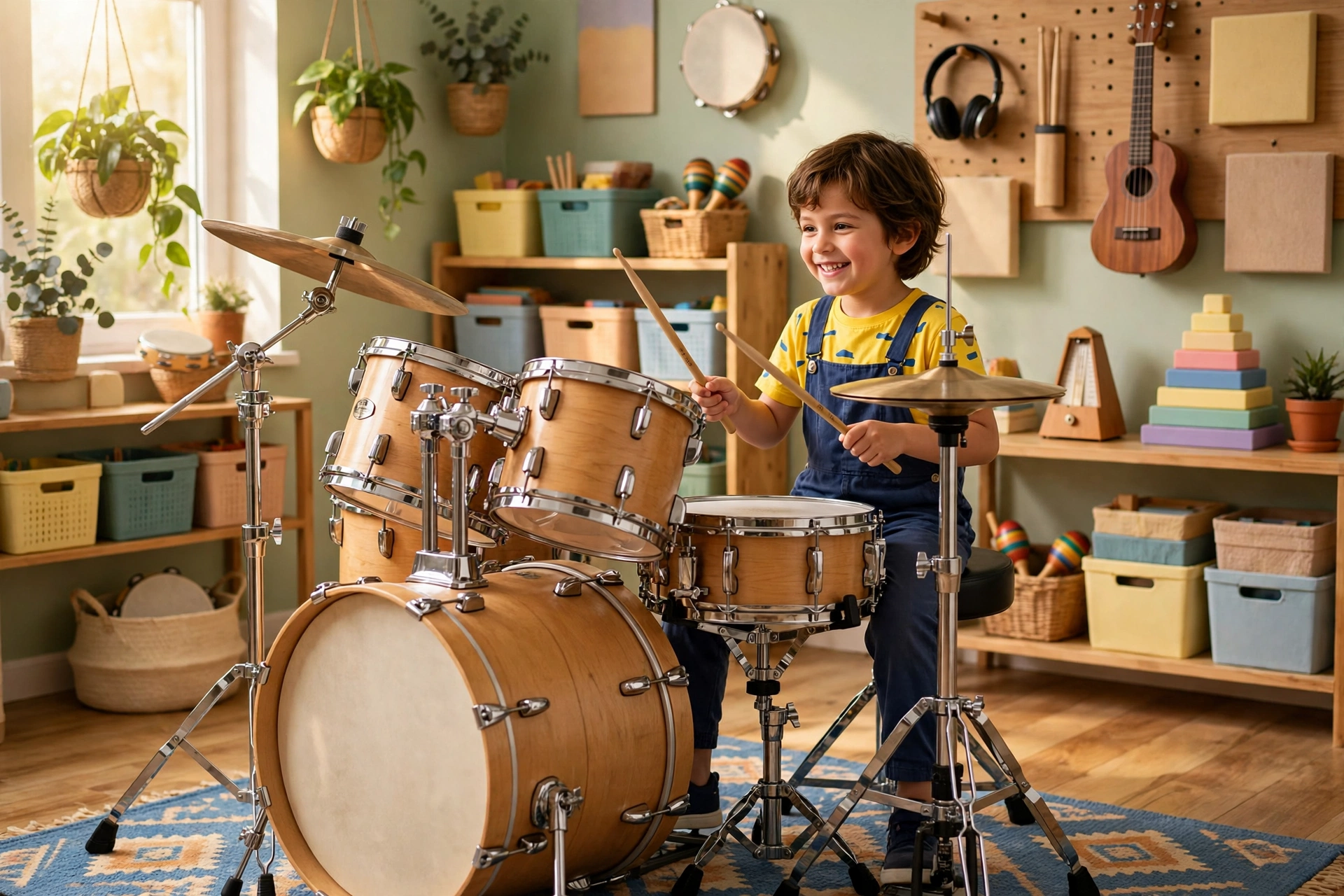
If your child taps on tables, drums on pots, or bounces along to every song in the car, you have probably wondered whether drum lessons are a good idea — and, just as quickly, worried about the noise. For many Burnaby families, drums turn out to be a practical first instrument: children can start with no experience at all, they play real music from the first lessons, and home practice does not have to mean a full drum kit in the living room. This guide explains what drum lessons actually teach, what a first lesson usually looks like, how to practise at home without disturbing the household, and how to tell whether your child is ready.
It is written for parents considering lessons at Music Star Learning Center in Burnaby, whose drum lessons in Burnaby are offered as private and group lessons for kids, teens, and adults of all levels. Everything about the school below comes from its own course, teacher, and program pages.
What Drum Lessons Actually Teach
Drumming is often described as “just hitting things in time,” but a structured lesson covers far more than that. According to the school’s drums course page, students work through rudiments (the basic sticking patterns that build speed and control), learn to read drum notation so they can understand rhythms on paper, and move from simple beats to grooves and fills. Coordination and timing get dedicated attention: hands and feet learn to work together, which is one of the reasons parents often notice their child becoming more focused and patient over time. That is a general observation, not a medical promise — every child progresses at a different pace, and a good teacher adjusts to the child in front of them.
Lessons are also musical from the start. The school describes a hands-on approach in which students play from day one with real songs and practical exercises, rather than spending months on theory before touching an instrument. Styles covered include rock, pop, funk, jazz, Latin grooves, and even classical percussion. As students grow more confident, the course builds toward performance skills: playing solo, with a band, or in an ensemble. For students who want a formal path, the school also offers exam and RCM preparation.
What a First Lesson Typically Looks Like
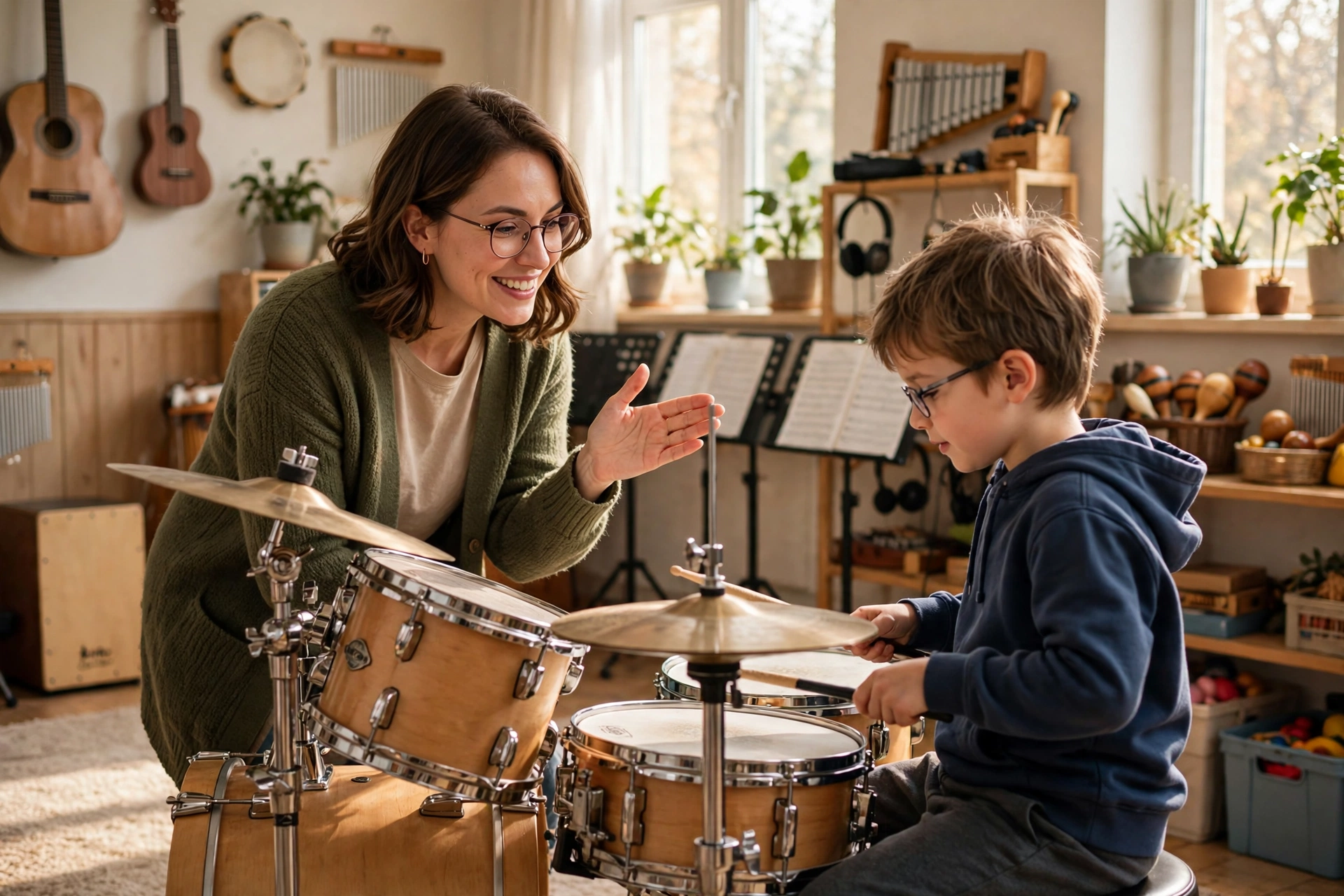
A first drum lesson is usually much calmer than parents expect. It does not begin with a loud solo. A typical first session at a school like Music Star Learning Center goes something like this:
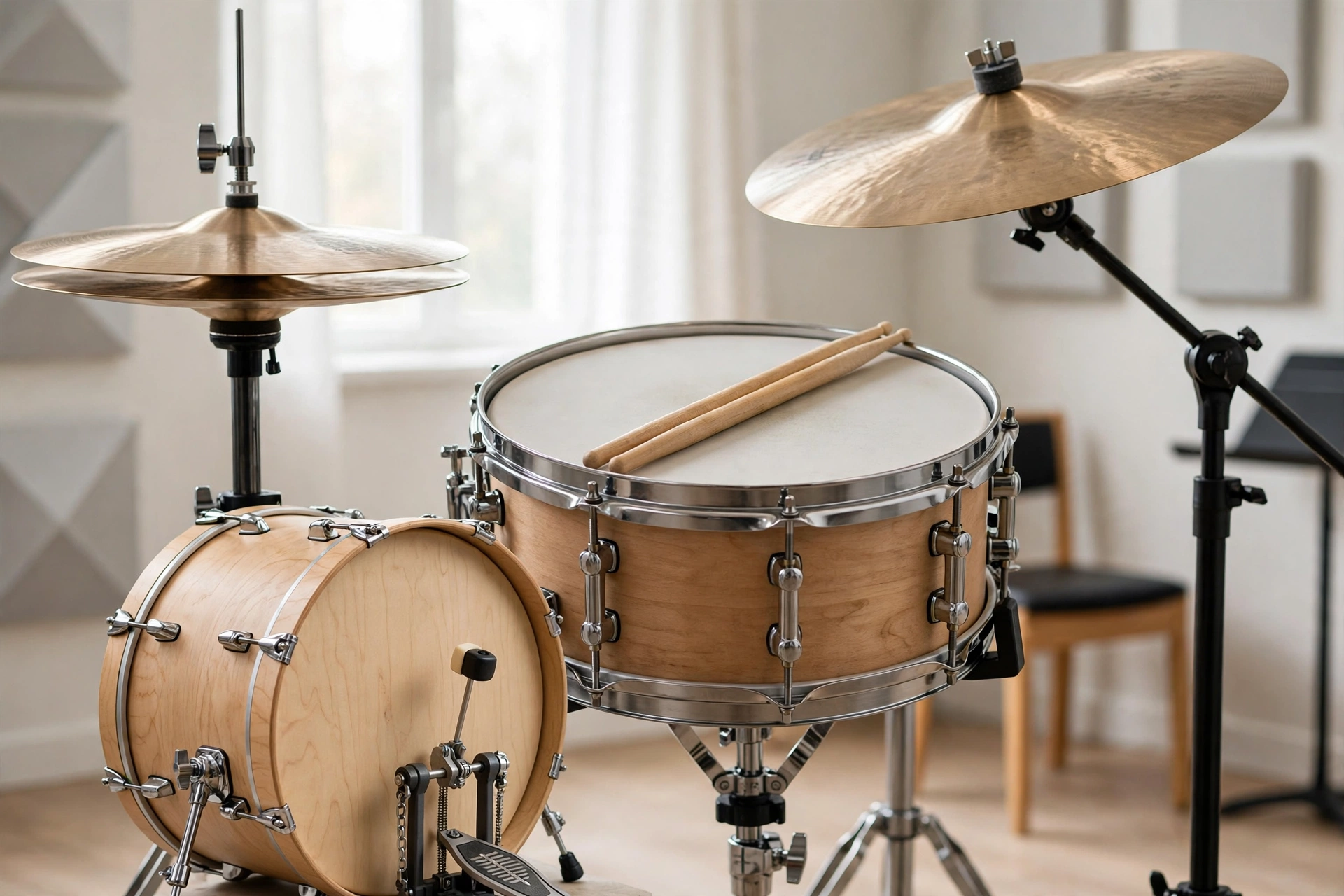
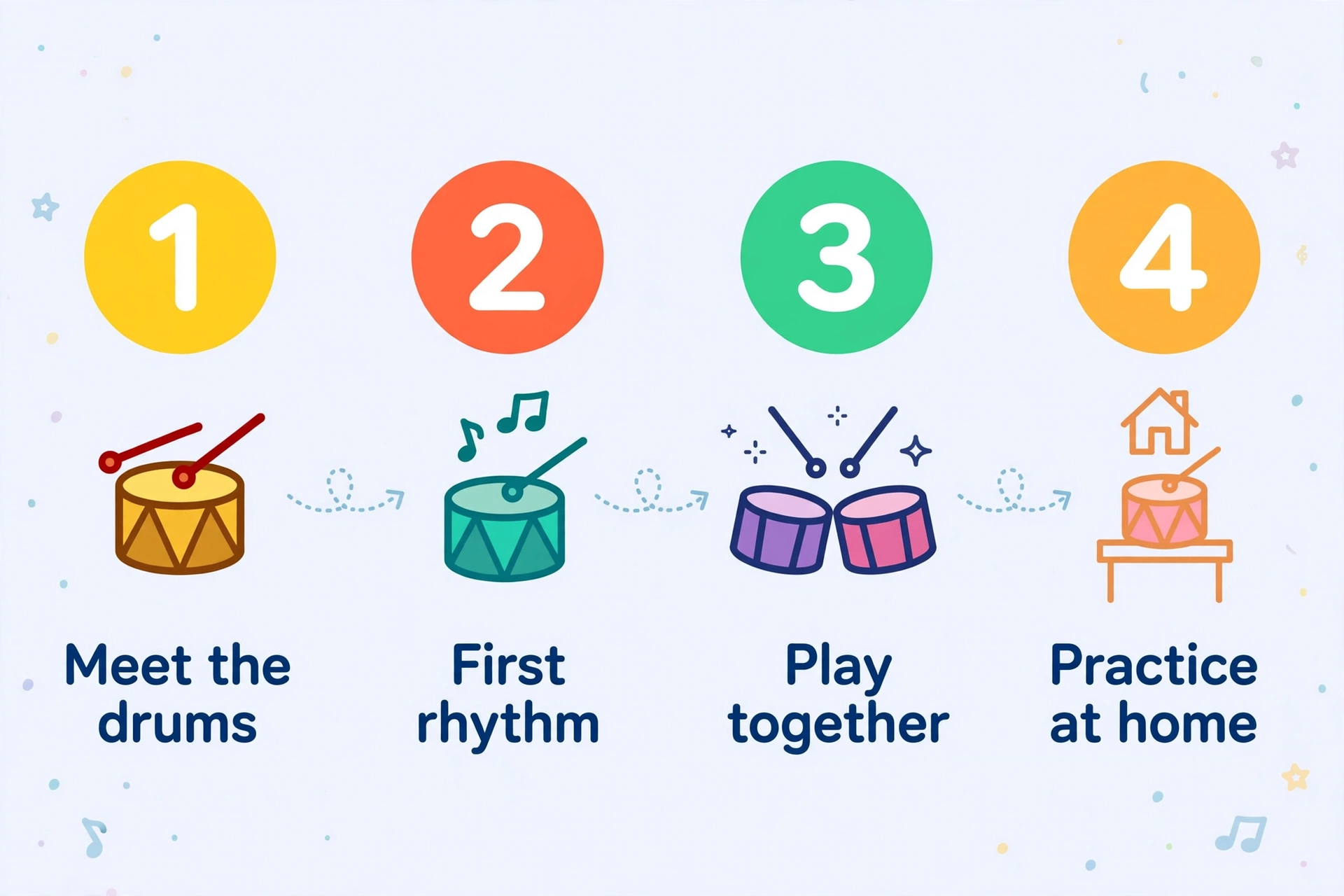
- A welcome and a look around the kit. The teacher shows the child the parts of the drum set — the snare, the bass drum played with a foot pedal, the hi-hat, and the cymbals — and lets them hear what each one sounds like.
- How to sit and hold the sticks. Posture and grip come first, because comfortable playing prevents bad habits and sore arms later.
- A first simple beat. Most children play their first steady beat in the opening lesson: a basic pattern they can repeat, often counted out loud with the teacher.
- A short piece of a real song. Teachers often pair that first beat with a familiar song so the child leaves feeling like a drummer, not just a student who practised an exercise.
- Something small to try at home. That is usually a tapping pattern or a practice-pad exercise, not a full page of homework.
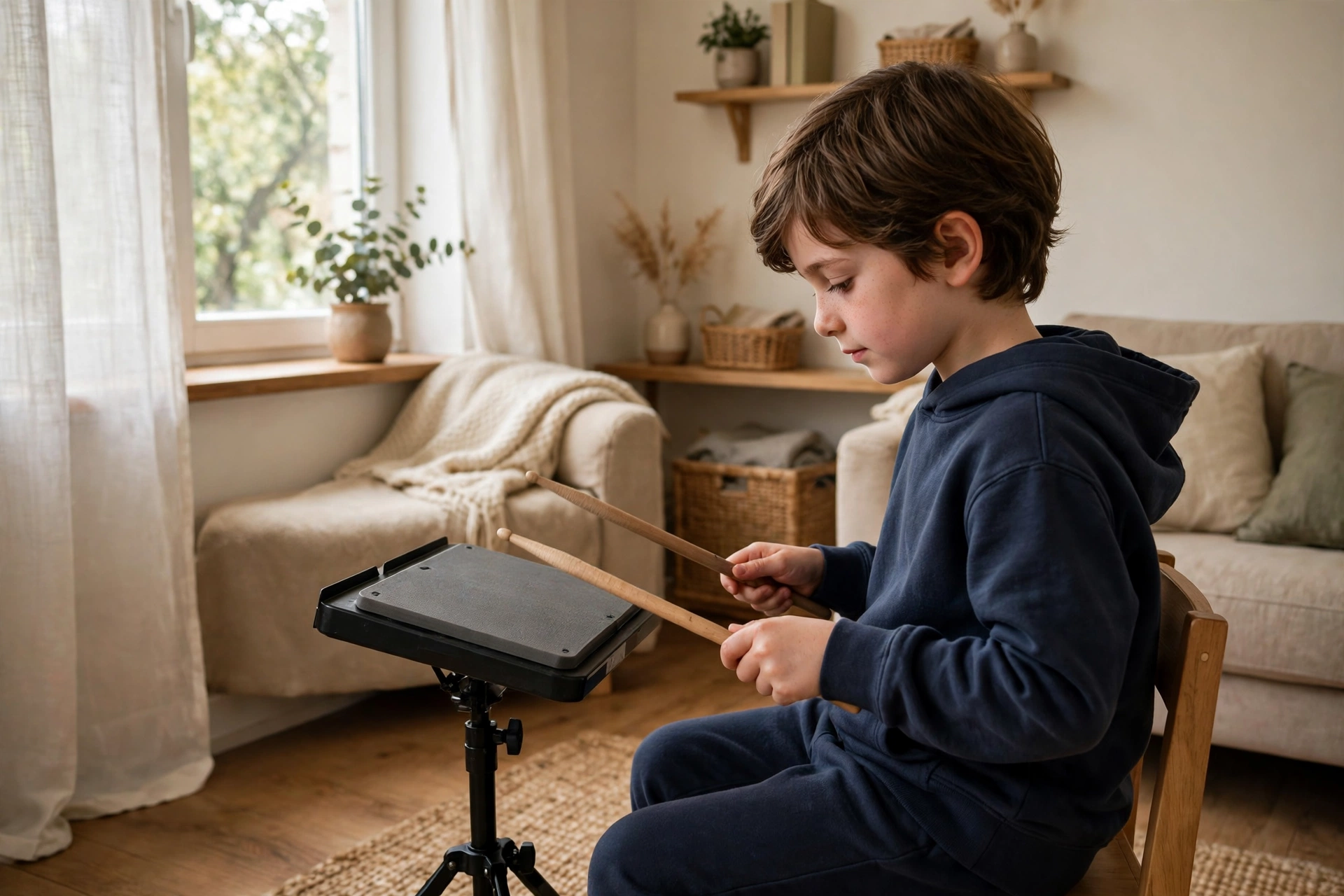
Two practical points from the school’s drums FAQ: your child does not need their own drum set, as the school provides practice drums for in-person lessons and a simple practice pad works at home; and lessons are available in person in Burnaby and online across Canada.
Drums vs Piano vs Guitar: Which Suits a Beginner Child?
There is no single “best” first instrument — only a best fit for a particular child. The comparison below is qualitative, based on how each instrument is normally taught at the school, and it is meant to help a conversation with a teacher, not to replace one.
| Question | Drums | Piano | Guitar |
|---|---|---|---|
| First musical success | Often in the first lesson: a steady beat over a song | Often in the first lessons: a simple melody with both hands following later | Often in the first lessons: a chord or a simple riff |
| Coordination demand | High in a fun way: hands and feet doing different jobs | High: two hands reading two lines of music | Moderate to high: one hand fretting, one hand strumming or picking |
| Noise at home | Controllable: practice pad and quiet routines work well | Quiet by nature, especially on a keyboard with headphones | Quiet to moderate on an acoustic or unplugged electric guitar |
| What you need at home to start | A practice pad is enough to begin | A piano or keyboard | A guitar in a suitable size for the child |
| Reading music | Drum notation, learned step by step | Standard notation from the start, with RCM levels 1–10 available | Chord charts and notation, depending on the approach |
| Playing with others | Bands and ensembles are a natural next step | Recitals and events; ensemble playing comes later for most beginners | Bands, duets, and group playing as skills grow |
| A good sign it fits | Your child moves to music, loves rhythm games, and has energy to burn | Your child likes patterns, songs with words, and sitting to concentrate | Your child already sings along to guitar songs or wants to play like a favourite musician |
If your child is torn between two instruments, let their interest lead, and use a trial lesson to test the fit before committing — the point made in the school’s own guide: How to Choose the Right Music School for Kids in Burnaby.
Practising at Home Without Disturbing the Household
This is the question every parent asks first, and it has a reassuring answer: home practice for a beginner drummer does not require a drum kit, and it does not need to be loud. Here is what works for most families:
- Use a practice pad. A practice pad is a small, quiet rubber pad on a stand or table. It is what the school itself suggests for home practice, and it is where rudiments and sticking patterns are built. A child can do a full practice session on one without anyone in the next room noticing much.
- Keep sessions short and regular. For a younger child, a short daily session beats one long weekend session. A teacher can suggest a length that fits your child, but the habit matters more than the clock: same time, same pad, same few patterns, most days.
- Agree on a practice time. Pick a time that suits the household — after school, before dinner — and treat it like any other routine. Children practise more willingly when the time is predictable and the session has a clear end.
- Clap and count away from the kit. Rhythm games, clapping patterns, and counting beats to a favourite song all build timing without any instrument at all, and they are a good option for days when even a pad feels like too much.
- Let the teacher set the homework. A few focused exercises from the lesson will help more than an hour of unstructured drumming. If practice becomes a battle, tell the teacher — adjusting the material is part of their job.
As your child progresses, you may eventually consider a kit at home, and the teacher is the right person to advise on timing, size, and quieter options. There is no rush: the school provides practice drums for in-person lessons, so progress does not depend on buying equipment early.
How to Tell If Your Child Is Ready
There is no single “right” age for drum lessons, and the school does not set one on its drums page — it welcomes beginners of all levels. Readiness is better judged by interest and habits than by a birthday. These signs usually mean a trial lesson is worth trying:
- They choose the rhythm. They tap, clap, or dance to music without being asked, or they ask about drums themselves.
- They can follow a short sequence. If they can copy a clapping pattern or follow two or three instructions in a row, they can follow a beginner lesson.
- They can stay with an activity for a little while. A lesson is a focused session, but a good teacher keeps it active and varied. Interest matters more than a long attention span.
- They bounce back from mistakes. Drumming involves getting a pattern wrong and trying again. A child who can laugh that off will enjoy lessons more than a child who needs everything perfect first time — though a patient teacher can help with that too.
- You can support a routine. Lessons work best when someone at home helps keep practice regular, especially in the first months. That support matters more than any musical background on your part.
If you are unsure, the honest answer is to try one lesson and watch. The school’s contact page notes that trial lessons can be arranged by phone or email, which is a low-pressure way to see how your child responds to a real teacher, a real kit, and a real beat — and whether they leave asking when they can come back.
Drum Lessons and the After-School Day
For many families, the hardest part of music lessons is not the instrument but the schedule. A weekly lesson after school can help the day feel more structured. Music Star Learning Center also runs an after-school program combining academic support, creative art, and music enrichment in a safe, supportive environment. If your child already attends that program, ask the school how drum lessons can fit alongside it.
Finding the Right Teacher and School
A drum teacher for a child needs real playing experience and a way with children. The school describes its drum teachers as working drummers and performers who help students find their groove, and its teachers page introduces the team. Its choosing-a-school guide adds what to look for: a teacher who matches your child’s personality, a structured curriculum, a welcoming room, and clear communication with parents about progress.
Frequently Asked Questions
Does my child need their own drum set to start?
No. The school provides practice drums for in-person lessons, and for home practice a simple practice pad is enough to begin. You do not need to buy a kit before the first lesson.
Are drum lessons too loud for our home?
Not for a beginner. Home practice is normally done on a quiet practice pad, with short, regular sessions at an agreed time. A full kit at home is a later decision, and your teacher can advise on timing and quieter options when the time comes.
Can a complete beginner start drum lessons?
Yes. The school’s drums page states that teachers are experienced with complete beginners and guide new students step by step, starting with posture, grip, and a first simple beat.
How long is a drum lesson, and what do lessons cost?
Lesson lengths are listed on the school’s drums and pricing pages, including 30-minute, 45-minute, and 60-minute options, with shorter sessions recommended for younger beginners. Because rates can change, check the current pricing page for the latest figures before booking.
Are online drum lessons available?
Yes. The school offers interactive online drum lessons across Canada, as well as in-person lessons in Burnaby. Families who cannot always travel can keep a regular lesson time online.
Ready to Hear the First Beat?
If your child is already drumming on everything in sight, a trial lesson is the simplest next step: one session, a real kit, and a teacher who can tell you honestly how they got on. Ask about drum lessons in Burnaby through the school’s contact page, or call (778) 386-6387. The school is at 4789 Kingsway, Unit 200, Burnaby, BC — and the first beat your child plays may be sooner than you think.

